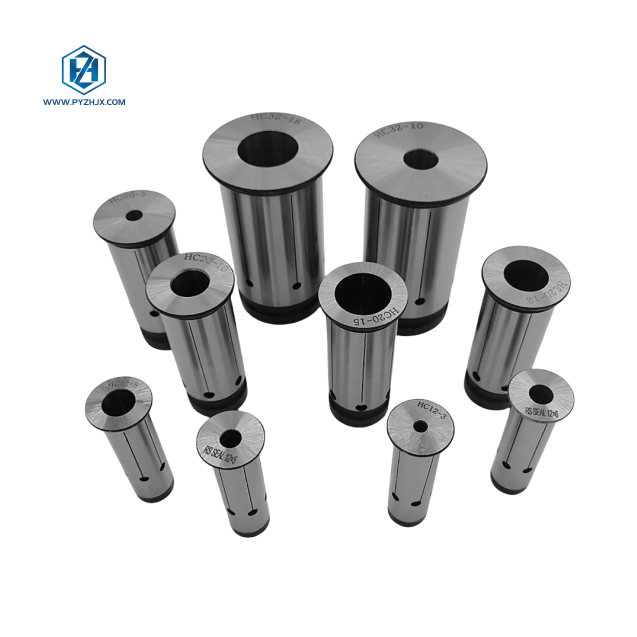
Choosing the right collet size is essential for machining accuracy, tool stability, and tool life. A collet that is too large, too small, or not matched to the application can lead to runout, poor surface finish, vibration, and premature tool wear.
For CNC users, buyers, and distributors, the correct collet selection is not only about matching a diameter. It also involves understanding the collet series, clamping range, runout tolerance, tool holder compatibility, and machining application.
As a manufacturer of precision spring collets, Zhenghao supplies multiple collet series including ER collets, SDC slim collets, OZ collets, and DIN6343 round collets for different clamping systems and industrial uses. You can first explore our full collet product range before selecting the most suitable type for your project.
Why Collet Size Selection Matters
A collet is a precision clamping component used to hold cutting tools or workpieces securely in machining systems. Even if the tool holder and spindle are of high quality, the wrong collet size can reduce the overall performance of the setup.
Selecting the proper collet size helps ensure:
stable clamping force
lower runout
better surface finish
improved machining consistency
longer tool life
safer high-speed operation
For buyers sourcing collets in bulk, proper size selection also reduces customer complaints, compatibility issues, and replacement costs.
Step 1: Identify the Collet Type You Need
Before choosing the size, you need to confirm the collet system. Different collet types are designed for different holders and applications.
Common collet types include:
ER collets: widely used in CNC milling, drilling, engraving, and general tool holding
OZ collets: commonly used in milling applications
SDC slim collets: designed for slim hydraulic tool holder systems
DIN6343 round collets: often used for guide bush and bar feeder systems
If your application is general CNC tool clamping, ER collets are usually the most common choice. Zhenghao manufactures ER8 through ER50 collets according to DIN6499, making them suitable for a wide range of machining needs.
When users are uncertain between different systems, it is helpful to compare the product structure, holder compatibility, and intended application before final selection.
Step 2: Match the Collet Size to the Tool Shank Diameter
The most basic rule is simple:
the collet must match the tool shank diameter you want to clamp.
For example:
a 6 mm tool shank should use a collet suitable for 6 mm clamping
a 12 mm tool shank should use a collet designed for 12 mm
an inch-size tool should use the corresponding inch collet when required
However, in real applications, the choice is not always based on nominal size alone. Buyers also need to consider the actual clamping range of the collet.
Step 3: Understand the Collet Clamping Range
One of the most common questions from buyers is whether one collet can hold multiple diameters. The answer depends on the collet series and its designed compression range.
For many ER collets, there is a certain elastic clamping range. This allows the collet to clamp slightly different diameters within its specified range. However, this should never be misunderstood as unlimited flexibility.
Important points:
always follow the stated clamping range of the collet
avoid forcing a collet to clamp beyond its designed limit
for best accuracy, match the tool shank as closely as possible
use correct metric or inch specifications depending on the tool
Using a collet outside its intended range may lead to:
reduced clamping force
higher runout
poor concentricity
faster wear of both collet and tool
unstable machining performance
For distributors and OEM buyers, clearly labeling clamping range and system compatibility on catalogs and packaging can significantly reduce after-sales issues.
Step 4: Confirm the Collet Series Size, Such as ER16, ER20, ER32, or ER40
When people talk about collet size, they may actually mean two different things:
the series size such as ER16, ER20, ER25, ER32, ER40
the bore size or internal clamping diameter such as 6 mm, 8 mm, or 1/4"
These are not the same.
For example:
ER32 refers to the collet series and external profile standard
ER32-10mm refers to an ER32 collet with a 10 mm clamping size
This means buyers must confirm both:
the correct holder system
the correct tool shank diameter
A tool holder designed for ER32 collets cannot use ER20 collets, even if the bore diameter is similar. So when ordering, always verify the full specification instead of only stating the diameter.
If your customers are purchasing not only collets but also related accessories, it is often more efficient to source them from a supplier that provides a broader range of CNC tooling components together.
Step 5: Consider Accuracy Requirements
Different machining jobs require different levels of precision. A standard production job may tolerate more runout than a precision finishing process.
When selecting a collet, buyers should check:
clamping accuracy
runout tolerance
consistency between batches
fit with the tool holder and collet nut
Zhenghao’s spring collets typically offer clamping accuracy in the range of 0.008 mm to 0.015 mm, depending on the model and requirement. This level of precision is suitable for many CNC machining applications where reliable clamping and repeatable performance are essential.
For higher-precision projects, the collet should be selected together with a suitable holder, nut, and properly maintained spindle system. Even a high-quality collet cannot perform well if the rest of the setup is not properly matched.
Step 6: Check Material and Heat Treatment Quality
Collet performance does not depend on size alone. The manufacturing quality behind the collet is just as important.
A high-quality spring collet should offer:
stable elasticity
strong clamping force
resistance to deformation
good wear resistance
long service life
Zhenghao’s collets are made from spring steel and processed with precise heat treatment to help maintain consistent clamping force and durability during long-term use.
For bulk buyers, this is an important consideration because poor material quality or inconsistent heat treatment can cause:
uneven clamping
shorter service life
batch inconsistency
more customer returns
This is why many professional buyers evaluate not only price, but also process control, inspection standards, and supplier manufacturing capability.
Step 7: Think About the Machining Application
The best collet size and type also depend on how the collet will be used.
Typical application considerations include:
General CNC Milling and Drilling
ER collets are widely used because of their versatility and broad size range.
Slim Tool Holding Applications
If the setup requires a slimmer profile, SDC slim collets may be more appropriate for hydraulic tool holder systems.
Milling-Specific Uses
OZ collets are commonly selected for certain milling operations.
Guide Bush and Feeding Systems
DIN6343 round collets are typically used in guide bush and bar feeder systems rather than general tool holder applications.
Choosing based on application helps avoid the mistake of selecting a collet only by diameter while ignoring system design and working conditions.
Step 8: Check Whether You Need Metric or Inch Collets
International buyers often handle both metric and imperial tools. Before ordering, make sure the tool shank size is clearly confirmed.
This is especially important when:
supplying overseas markets
building retail assortments
preparing collet sets
serving maintenance departments with mixed tooling standards
A mismatch between metric and inch sizes can cause clamping instability even when the difference looks small. For this reason, professional buyers usually list all required sizes clearly in the purchase order.
Step 9: Consider Individual Pieces or Complete Collet Sets
Depending on the purchasing model, customers may need:
individual collets for replacement
complete collet sets for workshops or resellers
wooden-box sets for storage and retail presentation
Zhenghao offers collets both individually and in complete sets with wooden storage cases, which can be useful for distributors, retailers, and workshop users who want a more organized solution.
For wholesalers and OEM buyers, set configuration can also be customized according to market demand.
Step 10: Evaluate the Supplier’s Manufacturing Capability
When choosing collets for long-term procurement, size selection should be combined with supplier evaluation.
A reliable collet supplier should be able to offer:
stable quality
clear standard specifications
consistent production
OEM or ODM support if needed
sufficient capacity for bulk orders
related tooling products for one-stop sourcing
Zhenghao provides a broader CNC tooling range beyond collets, including tool holders, pull studs, collet nuts, and specialized arbors. For buyers looking for more than a single component, it may be useful to review the company’s broader product offering and sourcing capability when planning larger procurement projects.
Common Mistakes When Choosing Collet Size
Even experienced buyers sometimes make avoidable selection mistakes. The most common ones include:
choosing only by tool diameter without checking the collet series
ignoring the clamping range
mixing metric and inch sizes
using a collet beyond its intended compression range
overlooking runout requirements
buying low-cost collets without checking material and heat treatment quality
not confirming compatibility with the holder and nut
Avoiding these issues can significantly improve machining reliability and reduce replacement frequency.
Practical Buying Tips for Distributors and OEM Buyers
If you are buying collets for resale, private label, or industrial supply, it is recommended to confirm the following with your supplier:
available series range, such as ER8 to ER50
supported standards, such as DIN6499 or DIN6343
material type
clamping accuracy
heat treatment process
packaging options
set configuration
OEM logo or marking support
monthly production capacity
lead time for bulk orders
This kind of checklist makes purchasing more efficient and helps ensure product consistency across repeated orders.
Conclusion
Choosing the right collet size for CNC machining requires more than matching a nominal diameter. Buyers should also consider the collet type, series compatibility, clamping range, accuracy, material, heat treatment, and actual application.
A properly selected collet improves machining stability, protects tool life, and supports better production consistency. For buyers and distributors, it also helps reduce compatibility problems and improve end-user satisfaction.
If you are looking for a reliable supplier of precision spring collets, Zhenghao offers multiple collet series including ER, SDC, OZ, and DIN6343 models, with dependable quality and OEM/ODM support. You can browse our full collet product category here or contact us for help with model selection and bulk purchasing.
FAQ
What is the difference between ER16, ER20, ER32, and ER40 collets?
These numbers refer to different collet series sizes, not the internal clamping diameter. Each series is designed for a specific tool holder system and has its own size range.
Can one ER collet hold multiple sizes?
ER collets usually have a limited clamping range, but they should only be used within their specified range. For the best accuracy, match the tool shank size as closely as possible.
Is it better to use metric or inch collets?
Use the specification that matches the actual tool shank. Metric tools should use metric collets, and inch tools should use inch collets when required.
What runout is acceptable for CNC collets?
This depends on the application. In many cases, a clamping accuracy range of 0.008 mm to 0.015 mm is suitable for general precision machining, while more demanding applications may require tighter control.
How do I know if a collet is high quality?
Check the material, heat treatment, accuracy, consistency, standard compliance, and supplier reliability. A quality collet should provide stable clamping force and long service life.
Can I order custom collets or private label collet sets?
Many manufacturers support OEM or ODM services. If you need custom marking, packaging, or configurations, it is best to confirm technical and commercial details with the supplier before ordering.